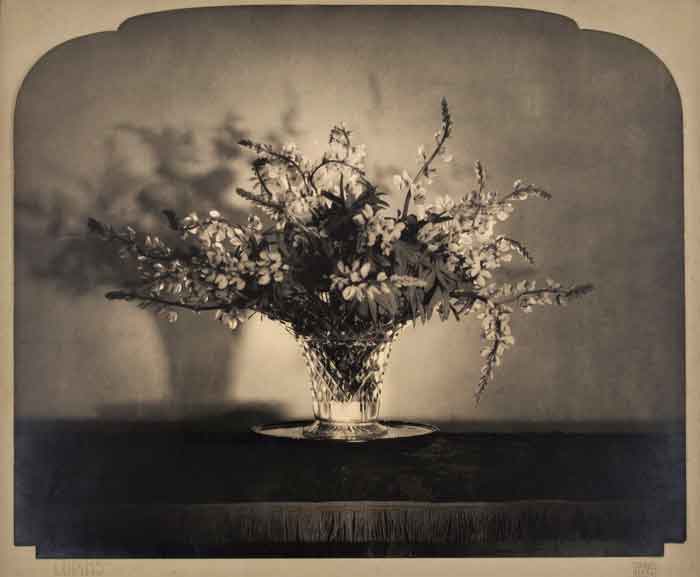
For a curator, one of the quieter regrets of a long career is discovering, usually too late, the questions you never asked.
I knew many of the photographers whose work I spent my working life on. I visited their homes, looked through their prints, and talked with them for exhibitions and catalogues, and one by one I saw them go. It is only now, looking back, that I realise how many chances I had to ask more, and didn’t.
Partly it was the nature of the work. In those first years years as the first photography curator at the Art Gallery of New South Wales, I was often doing the big survey rather than the deep dive, fitting people and events into a larger story of Australian photography. My skills an investigator were having to rapidly evolve as they were being applied to particular projects. And hindsight has its own way of exposing questions about events that were neatly slotted into a larger narrative– and left there.
Over the following decades, the substantial biographies, monographs and critical studies appear, and specific questions and anomalies bubble up – the kind that make you wish you could get out the Ouija board and put them directly to those departed.
Occasionally you get a second look at what you missed, or didn’t appreciate as well as you might have. That happened to me when I was asked to give a talk on the National Gallery of Australia’s touring exhibition of Max Dupain and Ansel Adams at Bayside Gallery in Melbourne. Like many curators and admirers of Dupain, I had never felt the same enthusiasm for the architectural photography he devoted so much of his post-war career to – work largely without human presence – as for his more overtly personal art.
I have already revisited Dupain’s 1936 Shattered Intimacy, drawing on a lecture I gave in November 1990. I have now also re-examined, with a degree of suspicion, Dupain’s later recollections of his debt to Cecil Bostock, in whose Sydney studio he trained from early 1930 until probably early 1934.
Dupain was quite definite that Bostock gave him a thorough technical and professional grounding. What he never mentioned was Bostock’s art photography. Yet from around 1917, Bostock was one of the most prominent figures in Sydney’s art photography scene.
A piece I have just worked on considers the aesthetic legacy Bostock may have left Dupain, and looks afresh at Bostock’s own career, cut short by his death in 1939. Along the way it takes in the Contemporary Camera Groupe of 1938 in which established Pictorialists such as Bostock and Harold Cazneaux joined younger modernists including Dupain and Olive Cotton in declaring their sympathy with the new.
The light-bulb moment came from a memory. Around 1980 I visited Max at his modern house at Castlecrag. In his study, prominently displayed, were photographs by Cecil Bostock and by the celebrated Belgian art photographer Léonard Misonne. He clearly loved those pictures.
I don’t recall ever asking him why they were there. I wish I had.